
SSL Stripping Attack: Understanding the Threat and How to Prevent It

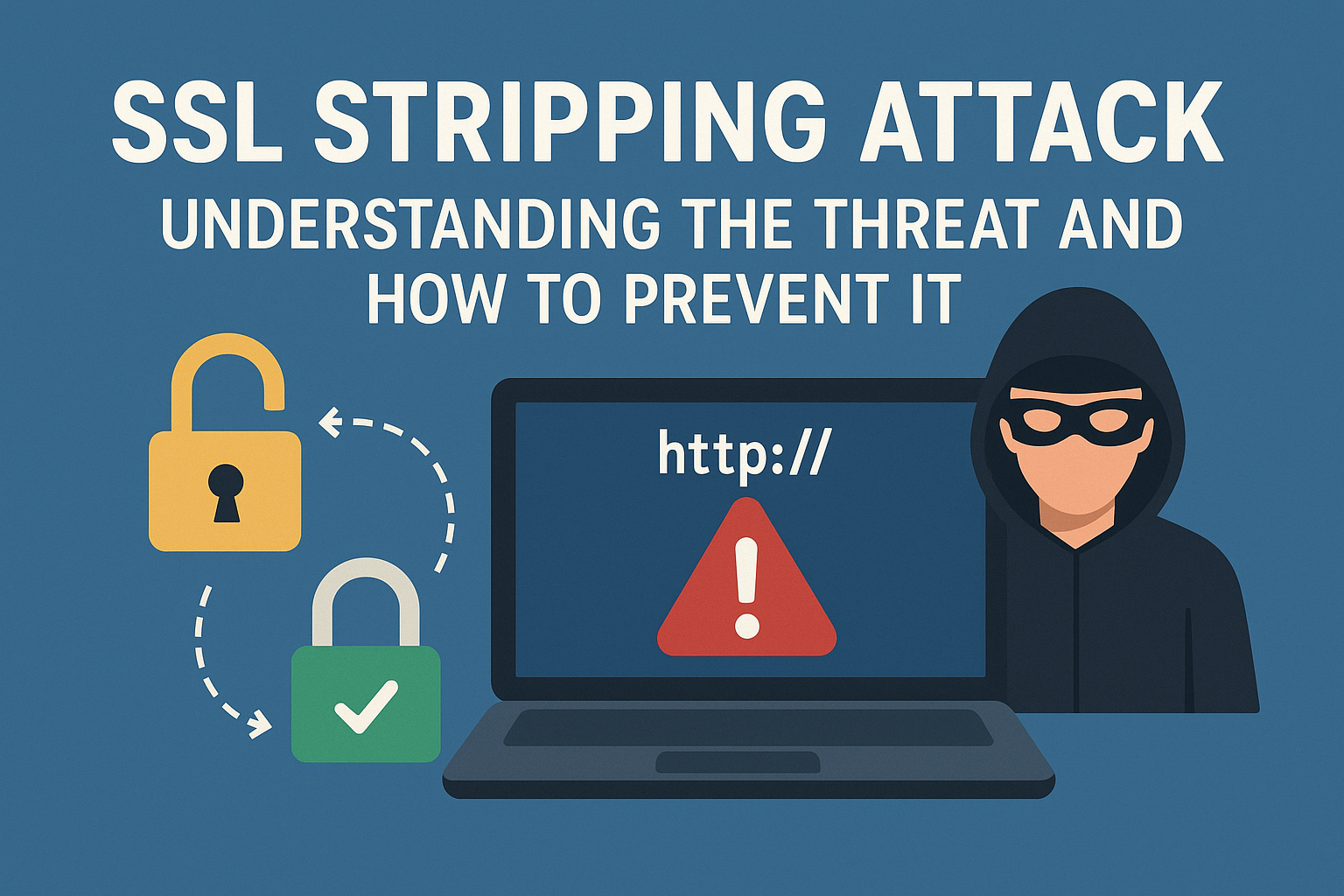
SSL stripping represents one of the most insidious forms of man-in-the-middle attacks targeting encrypted web communications. This attack technique exploits the transition between HTTP and HTTPS protocols, allowing cybercriminals to intercept and manipulate sensitive data that users believe is securely transmitted. Understanding how SSL stripping works and implementing proper defences is crucial for website operators and end users in today's increasingly connected digital landscape.
What is an SSL Stripping Attack?
An SSL stripping attack, also known as an HTTP downgrade attack, occurs when an attacker intercepts the initial HTTP connection between a user and a website, preventing the normal upgrade to HTTPS encryption. Instead of allowing the secure connection to establish, the attacker maintains the HTTP connection with the victim while establishing their own HTTPS connection with the target server.
The attack creates a deceptive scenario where users believe they are communicating securely with a legitimate website, when in reality, their connection remains unencrypted and vulnerable to interception. The attacker acts as a proxy, receiving unencrypted data from the victim, potentially modifying it, and then forwarding it to the actual server over an encrypted connection.
How SSL Stripping Attacks Work
The SSL stripping attack follows a systematic process that exploits the typical web browsing behaviour of users and the default configurations of many websites.
The attack begins when a victim connects to an unsecured wireless network or falls victim to other man-in-the-middle positioning techniques. The attacker positions themselves between the victim and the internet, often through ARP spoofing, DNS spoofing, or by operating a malicious Wi-Fi hotspot.
When the victim attempts to visit a website by typing a URL without specifying the protocol (such as typing "example.com" instead of "
https://example.com
"), their browser initially sends an HTTP request. The attacker intercepts this request and forwards it to the legitimate server. If the server responds with a redirect to HTTPS, the attacker modifies this response, removing the redirect and instead serving the HTTP version of the site.
Throughout the session, the attacker monitors all form submissions and link clicks. When the victim submits sensitive information like login credentials or credit card details through what appears to be a normal web form, the attacker captures this data in plain text. The attacker then forwards this information to the real server over an encrypted connection, maintaining the illusion of normal website functionality.
The victim receives responses that appear legitimate, complete with familiar website layouts and functionality. However, the address bar shows HTTP instead of HTTPS, though many users fail to notice this critical difference.
Common Attack Scenarios
SSL stripping attacks commonly occur in several environments where attackers can position themselves as intermediaries in network communications.
Public Wi-Fi networks represent the most frequent attack vector. Coffee shops, airports, hotels, and other venues offering free internet access create ideal conditions for SSL stripping. Attackers either compromise existing networks or create malicious hotspots with names similar to legitimate ones, such as "Free_Airport_WiFi" or "Starbucks_Guest."
Corporate environments can also fall victim to SSL stripping when insider threats exist or when network security is compromised. An attacker with access to network infrastructure can perform ARP spoofing or DNS manipulation to redirect traffic through their systems.
Home networks face risks when using outdated router firmware or weak security configurations. Attackers who gain access to home routers can implement SSL stripping techniques against all devices using the network.
Social engineering plays a role in some SSL stripping scenarios, where attackers convince victims to connect to malicious networks or install malicious software that facilitates the attack.
Identifying SSL Stripping Attacks
Several indicators can help users and security professionals detect potential SSL stripping attacks, though the attacks are designed to be subtle and difficult to notice.
The most obvious indicator is the absence of HTTPS encryption when it should be present. Users should be suspicious when sensitive websites like online banking, email services, or e-commerce platforms load over HTTP instead of HTTPS. The browser address bar will show "http://" instead of "https://" and will lack the padlock icon that indicates secure connections.
Performance anomalies may also signal an SSL stripping attack. Since the attacker must process and forward all traffic, connections may seem slower than usual. Unusual network behaviour, such as frequent connection resets or unexpected redirects, can also indicate interference.
Certificate warnings or errors that didn't previously occur may suggest that an attacker is attempting to intercept secure connections. While SSL stripping specifically targets the HTTP-to-HTTPS transition, attackers often employ multiple techniques simultaneously.
Browser behaviour changes, such as the automatic filling of HTTPS URLs being redirected to HTTP versions, can indicate that normal security mechanisms are being subverted.
Prevention Strategies for Website Operators
Website operators have several powerful tools available to prevent SSL stripping attacks against their users, with HTTP Strict Transport Security (HSTS) being the most effective defence.
HSTS represents the primary defence against SSL stripping attacks. This security feature instructs browsers to automatically use HTTPS for all connections to a domain, preventing the initial HTTP request that SSL stripping attacks exploit. Website operators implement HSTS by adding a specific header to their HTTP responses: "Strict-Transport-Security: max-age=31536000; includeSubDomains; preload". The max-age parameter specifies how long browsers should remember to use HTTPS, while includeSubDomains extends protection to all subdomains.
For maximum effectiveness, websites should register for HSTS preload lists maintained by browser vendors. Preloading ensures that browsers automatically use HTTPS for initial visits to the domain, closing the window of vulnerability that exists before HSTS headers are received.
Implementing secure cookie configurations provides additional protection for session management. Cookies should include the "Secure" flag to ensure they are only transmitted over HTTPS connections, and the "HttpOnly" flag to prevent access via client-side scripts.
Content Security Policy (CSP) headers can help prevent mixed content attacks that might accompany SSL stripping attempts. CSP directives can require all resources to be loaded over HTTPS and prevent inline scripts that might be injected by attackers.
Website operators should also implement proper redirect strategies, automatically redirecting all HTTP requests to HTTPS versions. However, these redirects alone are insufficient protection against SSL stripping, as attackers can modify the redirect responses.
User Protection Methods
Individual users can take several steps to protect themselves against SSL stripping attacks, though these require awareness and consistent security practices.
Browser security extensions provide automated protection against SSL stripping. Extensions like HTTPS Everywhere automatically upgrade HTTP connections to HTTPS when possible, reducing the attack surface for SSL stripping. These extensions maintain databases of websites that support HTTPS and automatically rewrite URLs to use secure connections.
Manual URL verification represents a simple but effective defence. Users should manually type "https://" before domain names when accessing sensitive websites, rather than relying on automatic redirects. This practice ensures that the initial connection request specifies HTTPS, making SSL stripping more difficult.
Certificate pinning applications can provide additional protection by maintaining databases of expected certificates for popular websites. These tools alert users when certificates don't match expected values, potentially indicating man-in-the-middle attacks.
Network security practices play a crucial role in prevention. Users should avoid untrusted Wi-Fi networks when possible, particularly for sensitive activities like online banking or shopping. When public Wi-Fi use is necessary, VPN services can encrypt all traffic, making SSL stripping attacks ineffective.
Browser security settings should be configured to warn about insecure connections and mixed content. Modern browsers include features that can be enabled to provide more aggressive warnings about HTTP connections to sensitive sites.
Network-Level Protections
Organisations can implement network-level protections to defend against SSL stripping attacks across their entire infrastructure.
Network segmentation and monitoring can detect and prevent SSL stripping attacks. Intrusion detection systems can identify suspicious traffic patterns associated with man-in-the-middle attacks, including unexpected HTTP traffic to sites that should use HTTPS.
DNS security measures, including DNS over HTTPS (DoH) or DNS over TLS (DoT), can prevent DNS-based attacks that facilitate SSL stripping. Secure DNS services help ensure that domain name resolution isn't compromised as part of the attack chain.
Firewall configurations can enforce HTTPS connections for specific domains or categories of websites. Enterprise firewalls can be configured to block HTTP connections to financial institutions, webmail providers, and other sensitive services.
Network access control (NAC) solutions can help prevent unauthorised devices from joining networks and performing SSL stripping attacks. These systems verify device compliance with security policies before allowing network access.
Employee education and security awareness training help users recognise and avoid SSL stripping attacks. Training should emphasise the importance of verifying HTTPS connections and recognising the signs of potential attacks.
Advanced Mitigation Techniques
Beyond basic protections, several advanced techniques provide additional layers of defence against sophisticated SSL stripping attacks.
Certificate Transparency monitoring helps detect when attackers attempt to use fraudulent certificates as part of more advanced attacks. Organisations can monitor CT logs for unauthorised certificates issued for their domains.
HTTP Public Key Pinning (HPKP), while deprecated in favour of other solutions, demonstrated the concept of binding specific cryptographic keys to domains. Modern alternatives include DNS-based Authentication of Named Entities (DANE) and Certificate Authority Authorisation (CAA) records.
Application-level protections can include client-side security checks that verify connection security before submitting sensitive data. Web applications can implement JavaScript checks to ensure HTTPS connections before processing form submissions.
Multi-factor authentication provides crucial protection even when SSL stripping succeeds. Even if attackers intercept login credentials, additional authentication factors can prevent account compromise.
The Future of SSL Stripping Prevention
The cybersecurity landscape continues evolving, with new technologies and standards emerging to address SSL stripping and related attacks.
Browser vendors are implementing increasingly aggressive HTTPS enforcement mechanisms. Features like "HTTPS-Only Mode" automatically upgrade HTTP connections and warn users about insecure sites. Some browsers are beginning to mark HTTP sites as "Not Secure" by default.
Emerging standards like HTTPS Resource Records (HTTPS RR) in DNS will enable automatic HTTPS enforcement at the DNS level, making it even harder for attackers to force HTTP connections.
The continued expansion of HSTS preload lists and the development of more sophisticated certificate transparency systems will provide better protection against various forms of man-in-the-middle attacks.
If you want to learn about what SSL Pinning is, and Why It’s Important? Then check out this guide
Conclusion
SSL stripping attacks represent a significant threat to web security, exploiting the gap between user expectations and technical reality. These attacks succeed by taking advantage of common user behaviours and the gradual adoption of HTTPS across the internet. However, proper implementation of security measures like HSTS, combined with user awareness and network-level protections, can effectively prevent these attacks.
The responsibility for preventing SSL stripping attacks is shared between website operators, who must implement proper security headers and configurations, and users, who must maintain security awareness and use protective tools. As the internet continues its migration toward universal HTTPS adoption, the opportunities for SSL stripping attacks will diminish, but vigilance remains necessary to protect against this and other evolving threats.
Understanding SSL stripping attacks and implementing comprehensive prevention strategies is essential for maintaining security in our increasingly connected world. By combining technical controls with user education and organisational policies, we can create a more secure internet environment that protects sensitive data from interception and manipulation.